
Published Papers
SUBJECT
Physics - Classical / Quantum / Superconductivity / Particle

Scientific Journal
IRJMETS - International Research Journal of Modernization in Engineering Technology and Science
Name of Scholar
Sanil Arora
Topic
Simulation of Orbital Mechanics Through Iteration
About the Scholar
Sanil is a student at Heritage Xperiential Learning School, Gurugram, India.
Name of Mentor
Guided Research
Summary
Different aspects of orbits of celestial bodies can be calculated by using different formulae. In this paper it is proposed that iterating over some initial conditions, using only one formula, many other phenomena of orbits, such as the variation in speed during the orbit, can be simulated. By calculating only the force between two bodies for some number of discrete time steps, it is possible to compute velocities, kinetic energies, and potential energies for the particles in question which match with the expected behaviour as predicted by other formulae. This study uses such a simulation to simulate the orbits of bodies with different initial conditions and then compares then analyses their behaviour with respect to quantities like kinetic and potential energies, values which the simulation is not programmed to take into account but does so anyway as an emergent effect. The study thereby validates this method of simulation of forces through iteration with discrete time steps.
View Paper
SUBJECT
Biology - Hydroponics / Environmental Science
Scientific Journal
IRJMETS - International Research Journal of Modernization in Engineering Technology and Science
Name of Scholar
Kyna Bhandari
Topic
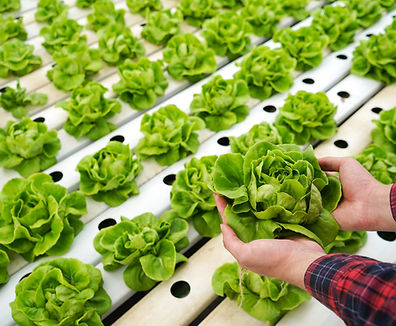
Evaluating the Efficiency of Hydroponic Farming
About the Scholar
Kyna is a student at Athénée De Luxembourg, Luxembourg City, Luxembourg
Name of Mentor
Guided Research
Summary
This experiment investigates the efficiency and therefore viability of hydroponic farming in comparison to traditional farming through building an at-home hydroponic farm. The aim of the experiment was to test if hydroponic farming could be used on an industrial scale and whether it could potentially replace soil-based farming. It measures the growth rate of plants in hydroponic and in traditional conditions by making one farm of each type. Four different plants: carrots, garlic, mint, and spring onions are grown in each farm under constant conditions- the sunlight, temperature, care given etc.- and are regularly measured and compared. The experiment finds that plants generally grow more efficiently in hydroponic conditions, however, geophytes do not grow well hydroponically compared to traditionally, likely due to overwatering. It also finds that hydroponic systems are easier to care for than traditional systems.
View Paper
SUBJECT
Economics - Micro / Macro / Developmental / Behavioral

Scientific Journal
IJSRC - International Journal of Social Relevance & Concern
Name of Scholar
Lakshya Batta
Topic
The January Effect Calendar Anomaly: An Empirical Analysis
About the Scholar
Lakshya is a student at Canadian International School, Bangalore, India. This paper was prepared by Lakshya as a part of his course work for LS190 - Introduction to College Level Research course at Allegheny College during summer 2023.
Name of Mentor
Guided Research
Summary
The January effect is perhaps the most extensively researched calendar anomaly in finance. However, it is still largely considered to be a mystery. This empirical study will review the extensive body of research surrounding the January effect and will endeavour to answer questions relating to why the January effect exists, as well as questions relating to its consistency. More specifically, it will look over the presence of the January effect globally, identifying potential trends across time and region. This paper will also take a look at the most popular explanations to the January effect, including taxloss selling and window dressing, verifying their validity. It will also consider other explanations that have not garnered as much popularity, such as performance hedging, seasonal liquidity, and investor optimism. This paper will however not be conducting any independent data examination or econometric analysis.
View Paper
SUBJECT
CS - AI / ML / Data Science / Quantum Computing / Blockchain / Computer Vision

Scientific Journal
IRJMETS - International Research Journal of Modernization in Engineering Technology and Science
Name of Scholar
Radhika Dadhich
Topic
Machine Learning meets Healthcare and Medicine
About the Scholar
Radhika is a student at Jayshree Periwal International School, India. This paper was prepared by Radhika as a part of her course work for LS190 - Introduction to College Level Research course at Allegheny College during summer 2023.
Name of Mentor
B.S., Peru State College; M.S., Ph.D., University of Nebraska at Omaha
Summary
Machine learning (ML) has revolutionized healthcare and medicine by enabling data-driven insights and decision-making. This paper focuses on deploying ML in healthcare, particularly for diseases like diabetes, to improve predictability using various algorithms and metrics. It highlights the importance of data quality, diverse datasets, and appropriate algorithms for building reliable diagnostic systems. The paper discusses experiments and evaluation metrics, including accuracy, precision, recall, and F1-score, to assess model performance. The study emphasizes the potential of ML in diabetes management, predicting blood glucose levels, aiding insulin dosage adjustments, and detecting complications early. It also discusses the need for data privacy, model interpretability, and ethical considerations in ML healthcare applications.
View Paper
SUBJECT
Business Studies - Market Research / Industry Research / International Business / FMCG / Consumer Goods

Scientific Journal
IJSRC - International Journal of Social Relevance & Concern
Name of Scholar
Arin Modi
Topic
Marketing Strategies of FMCG companies in India: A Comparative Study
About the Scholar
Arin is a student at Doon School Dehradun, India.
Name of Mentor
Guided Research
Summary
This research paper delves into the marketing strategies of different FMCG companies in India and explores how these strategies have led to their success in the competitive Indian FMCG market. Using the traditional marketing mix (4 Ps) as a framework, the paper analyzes how FMCG companies in India use product, price, place, and promotion to create and deliver value to their customers. The research also focuses on how these companies are using brand building, digital marketing, product placement, in-store promotions, influencer marketing, and a strong focus on sustainability and corporate social responsibility as key elements in their marketing strategy. The paper analyzes case studies of successful FMCG companies in India, namely Patanjali, Hindustan Unilever Limited (HUL), and ITC Limited, to better understand their marketing strategies and the factors that have led to their success. By examining these companies, the paper illustrates how FMCG companies in India use various marketing strategiesto reach and appeal to their target audiences. Additionally, the paper also discusses the effectiveness of different marketing strategies and how they vary depending on factors such as target audience, budget, market trends, and competition.
View Paper
SUBJECT
Biology - Hydroponics / Environmental Science
Scientific Journal
IRJMETS - International Research Journal of Modernization in Engineering Technology and Science
Name of Scholar
Sahana Ballabh
Topic
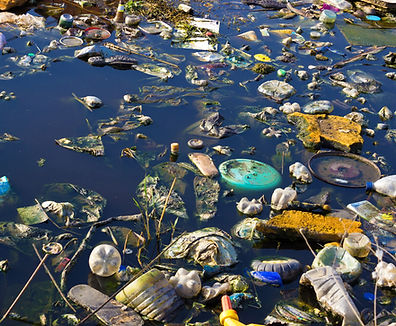
Microplastics in PNW, Bivalves, and the Impact on Oceanic Ecosystems and Human Health
About the Scholar
Sahana is a student at Eastlake High School, Sammamish, Washington, US
Name of Mentor
Guided Research
Summary
The presence of microplastics (MPS) in the Pacific Northwest (PNW) ecosystem has emerged as a pressing environmental concern, affecting both the local ecosystem and human health. Bivalves, integral members of the local ecosystem, are vulnerable to ingesting microplastics, which bioaccumulate in their tissues, leading to adverse health effects and contributing to biomagnification in the food chain, endangering keystone species and ecosystem stability. The unintentional ingestion of microplastics through seafood consumption raises significant health concerns for humans. These threats are a huge cause for alarm as they have the potential to irreparably damage our enviornment and health, and we should address these issues before they become a reality of the world.